Article
Bruce Willis's Family Plans Brain Donation: A Beacon of Hope for Dementia Research
 May 01, 2026
Updated May 02, 2026
2 min read
May 01, 2026
Updated May 02, 2026
2 min read
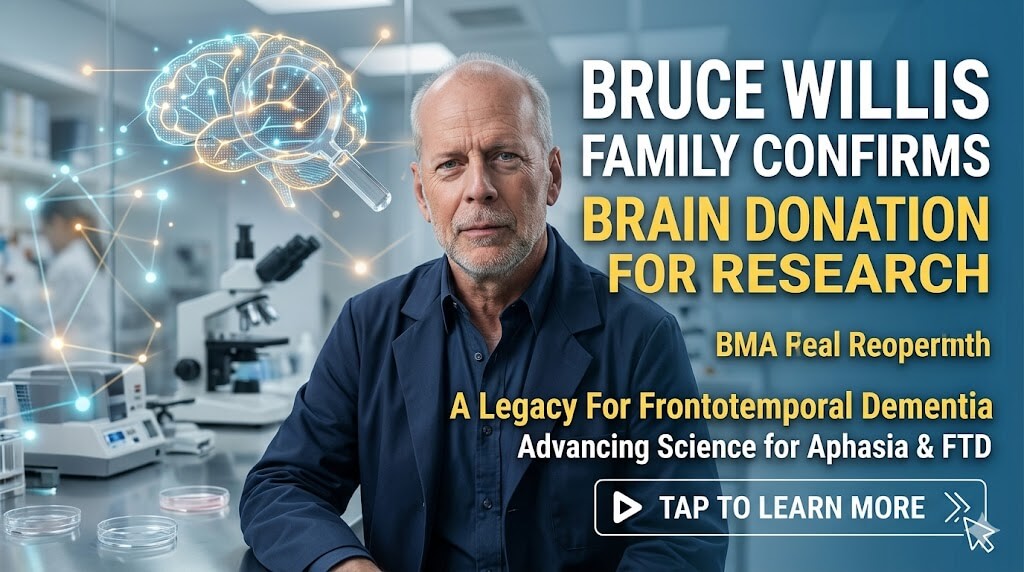
In a powerful and selfless act, Bruce Willis's family has announced plans to donate his brain for Frontotemporal Dementia (FTD) research. This decision offers a vital beacon of hope, accelerating our understanding of this challenging neurological condition.
The news of Bruce Willis stepping away from acting due to Frontotemporal Dementia (FTD) deeply saddened fans worldwide. Now, in a truly remarkable act of altruism, his family has announced their intention to donate his brain to science after his passing. This courageous decision marks a significant turning point in the fight against FTD and other neurological disorders.
A Selfless Act for Science
Bruce Willis’s family is taking a profound step by planning to donate his brain for research into Frontotemporal Dementia (FTD). This selfless decision provides an invaluable opportunity for scientists to study the disease firsthand. Understanding the intricate changes within the brain is crucial for developing effective treatments and ultimately finding a cure.
- Directly examine brain tissue affected by FTD.
- Identify specific cellular and molecular changes.
- Validate findings from imaging and clinical studies.
- Accelerate the development of new diagnostic tools and therapies.
What is Frontotemporal Dementia (FTD)?
Frontotemporal Dementia (FTD) is a group of disorders caused by progressive nerve cell loss in the brain's frontal and temporal lobes. These areas are associated with personality, behavior, and language. Unlike Alzheimer’s disease, which primarily affects memory, FTD often impacts:
- Behavioral changes (e.g., impulsivity, apathy).
- Language difficulties (trouble speaking or understanding).
- Motor problems (in some subtypes).
Currently, there is no cure for FTD, making research efforts critically important.
The Power of Post-Mortem Brain Donation
Why is brain donation so vital? While imaging techniques like MRI and PET scans provide valuable information, they cannot reveal the microscopic details of disease progression. Post-mortem brain examination allows researchers to:
- Observe actual tissue damage and protein accumulation.
- Study genetic and environmental factors at a cellular level.
- Confirm clinical diagnoses with biological evidence.
- Uncover new pathways for therapeutic interventions.
Every donated brain is a priceless gift, offering a window into diseases that remain largely mysterious.
Supporting the Fight Against Dementia
The Willis family’s decision highlights a powerful way to contribute to medical science. However, there are many other ways to support dementia research and families affected by these conditions:
- Financial Contributions: Donate to organizations dedicated to FTD and dementia research.
- Advocacy: Raise awareness and support policies for brain health.
- Clinical Trials: Participate in research studies if eligible.
- Caregiver Support: Offer help to families navigating dementia.
This courageous step by Bruce Willis’s family inspires hope and action, propelling us closer to a future free from the burden of dementia.
Disclaimer: This article is for general educational purposes only and is not medical advice. It is not a substitute for professional diagnosis or treatment. Always consult a qualified healthcare provider before making changes to your diet, supplements, training, or medication.