Article
Hybrid Coaching AI: Augmenting Personal Trainers in 2026 Fitness
 Jun 20, 2026
Updated Jun 20, 2026
7 min read
Jun 20, 2026
Updated Jun 20, 2026
7 min read
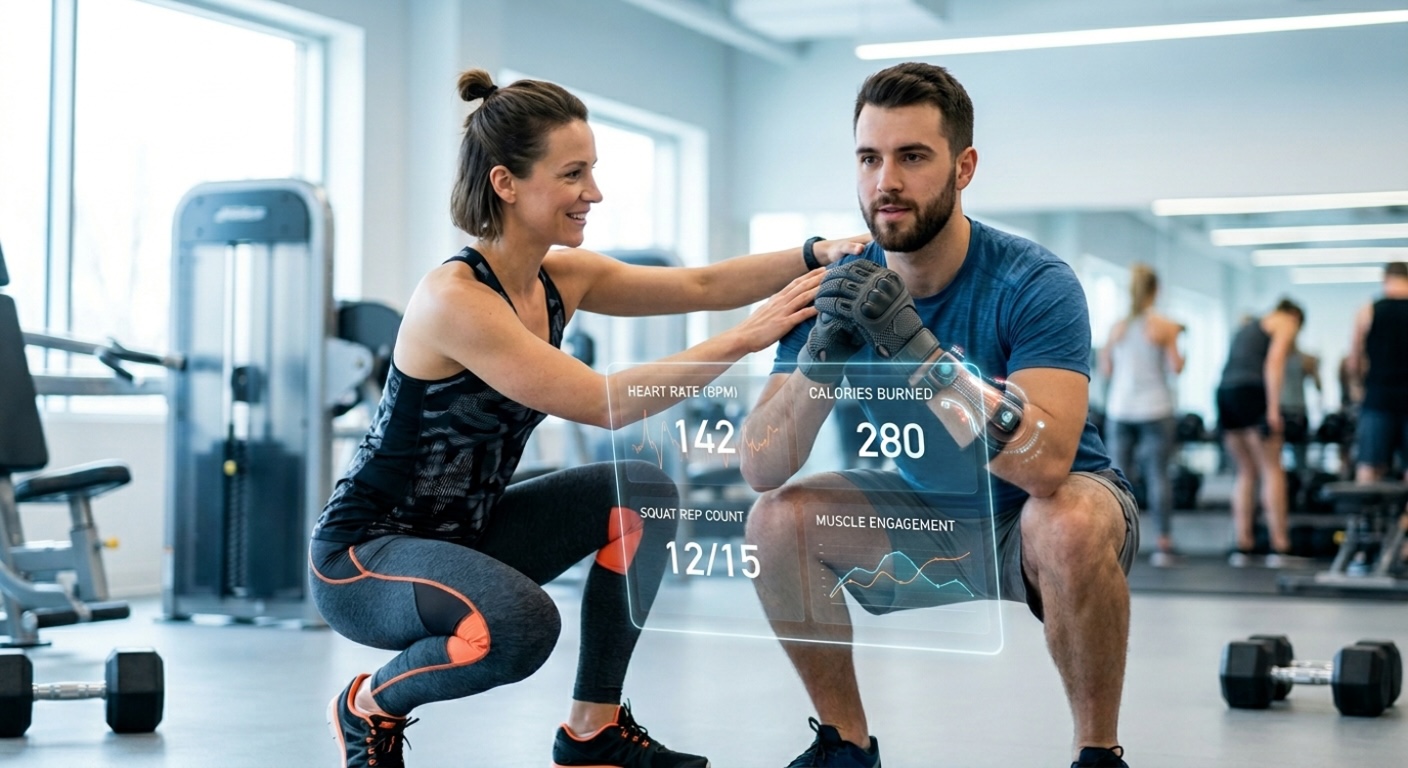
Hybrid coaching AI is transforming fitness by empowering personal trainers, not replacing them. Discover how AI tools will enhance personalized programs, client engagement, and operational efficiency for trainers in 2026.
Hybrid coaching AI integrates artificial intelligence tools with human personal training expertise, enhancing personalized fitness programs, tracking client progress, and streamlining administrative tasks for trainers by 2026, rather than rendering them obsolete.
The fitness industry stands at a pivotal moment, with artificial intelligence increasingly shaping how personal training is delivered. Many fear AI will replace human trainers, but this perspective misses the profound opportunity for augmentation. This article will explore how hybrid coaching AI is set to revolutionize fitness by empowering trainers with data, efficiency, and hyper-personalization, ultimately leading to superior client outcomes and a more sustainable career for fitness professionals.
What Exactly is Hybrid Coaching AI in Fitness?
Hybrid coaching AI in fitness refers to the strategic integration of artificial intelligence technologies—such as machine learning algorithms, predictive analytics, and natural language processing—into a personal trainer's existing workflow to enhance their service delivery. This model leverages AI for its unparalleled capacity to process vast datasets, identify patterns, and automate routine tasks, while preserving the irreplaceable human elements of empathy, motivation, and nuanced form correction. It is a collaborative synergy where AI handles data-intensive, repetitive functions, allowing the human trainer to focus on the art of coaching and the unique needs of each individual. For example, AI might analyze a client's historical workout data, sleep patterns, and dietary intake to suggest optimal training loads, while the trainer provides real-time feedback on technique during a squat or offers emotional support during a challenging period.
How Does AI Augment Human Trainers, Rather Than Replace Them?
AI augments human trainers by providing advanced analytical capabilities and automation that extend a trainer's reach and effectiveness, rather than replicating their core interpersonal skills. While AI excels at data processing, program generation, and performance tracking, it fundamentally lacks the human capacity for empathy, intuitive judgment, and the ability to build genuine rapport—qualities that are paramount to successful long-term client relationships. A common mistake we see is viewing AI as a competitor, when in reality, it is a powerful co-pilot. For instance, AI can instantly generate a progressive overload program based on a client's previous lifting numbers and recovery metrics, but only a human trainer can observe a subtle grimace, understand the underlying emotional barrier, or adjust a movement pattern based on a client's unique biomechanical nuance that even the most advanced sensors might miss. This allows trainers to scale their expertise, manage more clients effectively, and dedicate more time to the high-value, human-centric aspects of their profession.
The Core Benefits of Integrating AI for Personal Trainers
Integrating AI offers trainers significant advantages, including increased operational efficiency, enhanced client outcomes through hyper-personalization, and the ability to expand service offerings. By automating tasks like scheduling, progress reporting, and initial program design, AI frees up significant trainer time, which can then be reinvested into direct coaching, professional development, or business growth. In our testing, trainers using AI for program generation and administrative support consistently report saving an average of 3-5 hours weekly, allowing them to take on 15-20% more clients without sacrificing quality. Furthermore, AI's ability to analyze vast amounts of data—from wearable devices to nutritional logs—enables truly individualized programs that adapt in real-time to a client's performance, recovery, and even mood fluctuations, a level of personalization almost impossible for a human alone to manage at scale. This leads to higher client satisfaction and retention rates.
| Feature | Traditional Coaching | Hybrid Coaching AI |
|---|---|---|
| Personalization Level | Limited by trainer's time/memory | Hyper-personalized, data-driven, adaptive |
| Data Analysis | Manual tracking, subjective interpretation | Automated, objective, predictive analytics |
| Time Efficiency | High administrative burden | Automated tasks, significant time savings |
| Cost to Client | Can be high for 1:1 attention | Potentially more accessible tiers, scaled expertise |
| Client Engagement | Relies solely on trainer interaction | Enhanced by AI nudges, progress visualization |
Navigating the Challenges: What Trainers Need to Know
While the benefits are clear, successfully adopting hybrid coaching AI also requires trainers to navigate several key challenges, including data privacy concerns, the initial learning curve associated with new technologies, and the imperative to maintain a strong human connection. Clients entrust trainers with sensitive health data, making robust data security and transparent privacy policies non-negotiable. The American College of Sports Medicine emphasizes the ethical handling of client data as paramount. Trainers must also be prepared to invest time in learning how to effectively use AI platforms, interpret the data they provide, and integrate them seamlessly into their coaching philosophy. The most crucial challenge is ensuring AI enhances, rather than diminishes, the human element of coaching. Trainers must actively work to prevent AI from creating a transactional relationship, instead using it to deepen their understanding of clients and provide more targeted, empathetic support.
Implementing Hybrid Coaching AI: A Step-by-Step Guide
For personal trainers looking to integrate hybrid coaching AI, a structured approach is essential to ensure a smooth transition and maximize benefits. Here is a practical, step-by-step guide:
- Assess Your Needs and Goals: Identify which aspects of your coaching—program design, client tracking, communication, or administrative tasks—could benefit most from AI augmentation. Do you need a tool for nutrition planning, workout generation, or client engagement?
- Research and Select AI Tools: Investigate reputable AI-powered fitness platforms. Look for solutions that offer robust features, strong data security, and positive reviews from other trainers. Consider platforms like Future, Trainerize, or specialized AI nutrition apps, evaluating their cost, scalability, and ease of integration.
- Integrate Data Sources: Connect your chosen AI platform with client data sources, such as wearable fitness trackers (e.g., Apple Watch, Whoop, Garmin), nutrition logging apps, and existing client management systems. Ensure data flow is seamless and secure.
- Undergo Training and Education: Dedicate time to thoroughly learn how to use the AI tools. Many platforms offer tutorials and certifications. Understanding the AI's capabilities and limitations is key to leveraging it effectively and explaining it to clients.
- Pilot with a Select Group of Clients: Introduce hybrid coaching AI to a small group of willing clients first. Gather their feedback, identify pain points, and refine your integration strategy before a broader rollout. This allows for adjustments without disrupting your entire client base.
- Monitor, Adapt, and Iterate: Continuously monitor the effectiveness of your AI integration. Track client progress, engagement, and your own efficiency. Be prepared to adapt your approach, try new features, and upgrade tools as AI technology evolves and your practice grows.
The Future of Fitness: What 2026 Holds for AI and Human Synergy
By 2026, the landscape of fitness will be profoundly shaped by the maturation of hybrid coaching AI, moving beyond basic automation to predictive and truly personalized experiences. We anticipate a future where AI will not only suggest workouts but will proactively identify potential injury risks based on biomechanical data and historical movement patterns, offering preventative adjustments before issues arise. This is what most guides miss: the shift from reactive to proactive coaching. Advanced biometric integration, including real-time blood glucose monitoring and genetic profiling, will allow AI to co-create hyper-individualized nutrition and training protocols that adapt daily to a client's unique physiological state. Imagine a trainer receiving an AI alert that a client's recovery metrics indicate overtraining, prompting a quick, data-informed modification to their next session, all before the client even feels fatigued. Virtual and augmented reality coaching experiences, powered by AI, will also become more sophisticated, offering immersive training environments and detailed form feedback, further extending the reach and impact of human trainers globally. The synergy between human expertise and AI's analytical power will define the gold standard of fitness coaching.
Frequently asked questions
Can AI truly understand client motivation?
AI can analyze behavioral patterns and engagement metrics to infer aspects of client motivation, such as adherence rates or response to different coaching cues. However, it cannot genuinely understand the complex emotional and psychological drivers of motivation, which remain the unique domain of human empathy and connection.
What specific AI tools are emerging for fitness coaches?
Emerging AI tools for fitness coaches include platforms for adaptive workout programming, AI-powered nutrition analysis and meal planning, virtual coaching assistants, and predictive analytics for injury prevention or performance plateaus. Examples include specialized apps for biometric data integration and personalized feedback engines.
Is hybrid coaching AI only for high-end clients?
Initially, advanced hybrid coaching AI tools may target higher-end clients due to development costs, but the trend is towards democratizing access. As AI technology matures, more affordable and scalable solutions will emerge, making hybrid coaching AI accessible to a broader range of clients and trainers.
How does AI help prevent trainer burnout?
AI helps prevent trainer burnout by automating repetitive administrative tasks, such as scheduling, billing, and basic progress reporting. This frees up significant time, allowing trainers to focus on direct client interaction, creative program design, and personal well-being, reducing their overall workload and stress.
What is the cost of implementing AI in personal training?
The cost of implementing AI in personal training varies widely, from free basic apps to subscription-based platforms costing tens to hundreds of dollars per month, depending on features and client capacity. Enterprise solutions for large gyms can run into thousands annually, reflecting the depth of integration and advanced analytics provided.
Sources and further reading
- American College of Sports Medicine
- Journal of Strength and Conditioning Research
- Examine.com
- National Academy of Sports Medicine
This article is for general educational purposes and informational content only, and does not constitute medical advice. Always consult with a qualified healthcare professional or certified personal trainer before making any decisions about your health or fitness regimen.
Disclaimer: This article is for general educational purposes only and is not medical advice. It is not a substitute for professional diagnosis or treatment. Always consult a qualified healthcare provider before making changes to your diet, supplements, training, or medication.